公開日 2026.09.29
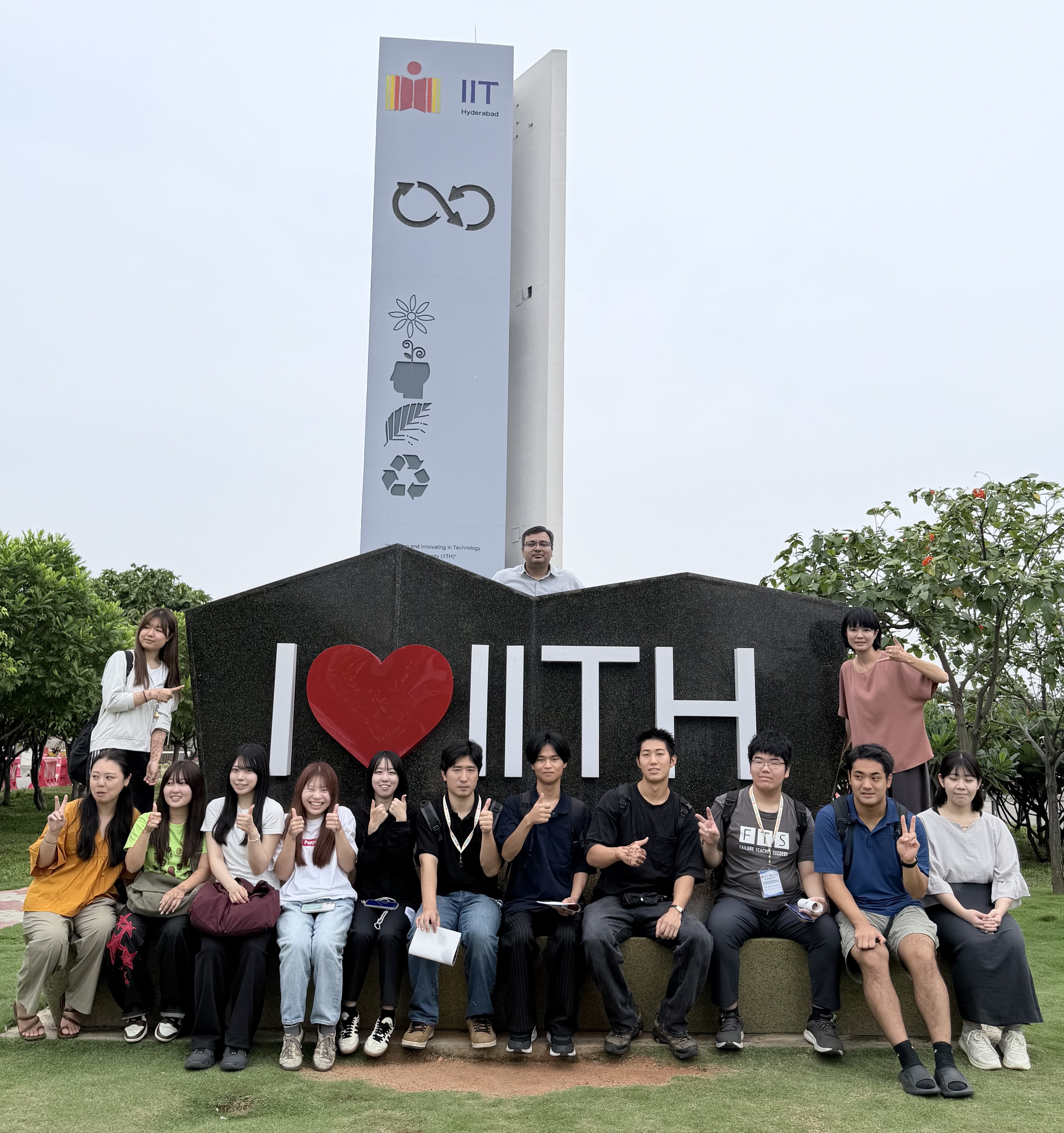
Shimane University conducted the "Short-term India Summer Training Program at the Indian Institute of Technology Hyderabad (IITH)" over a nine-day period from September 5 to 13, 2026.
This program was organized in collaboration with IITH, a partner university that hosts a JIGER hub jointly with Shimane University. Participants from Shimane University included eleven students, accompanied by Dr. Hemanth Noothalapati, Director of JIGER and Coordinator Asai. In addition to students from our university, 15 students from IITH and 16 students from Ehime University participated in the program, deepening their interactions across institutional and national boundaries.
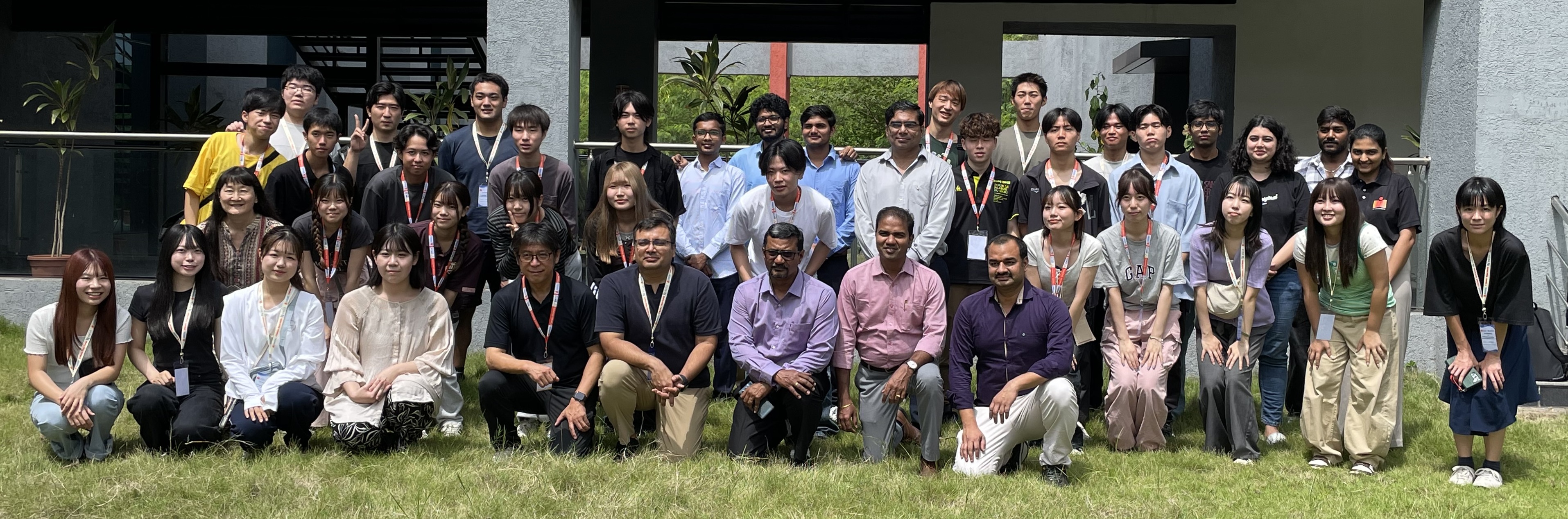 Group photo of all participants from Shimane University, Ehime University, and IITH
The core of the training was a Project-Based Learning (PBL) course conducted by Prof. MP Ganesh, which was taken alongside IITH students. Students formed mixed teams comprising both Japanese and Indian members, engaged in discussions on assigned tasks and proposed new business models and ideas to address the challenges. Reflecting on these discussions, the students realized that even when facing the same problem, differences in social backgrounds, cultural values, and living environments between Japan and India led to different ways of perceiving issues and identifying necessary solutions. By listening to one another and incorporating diverse perspectives to deepen their discussions, the students gained a valuable opportunity to cultivate the critical thinking and communication skills essential for solving global issues. Upon completion of the program, certificates of completion were awarded to all participating students from JIGER.
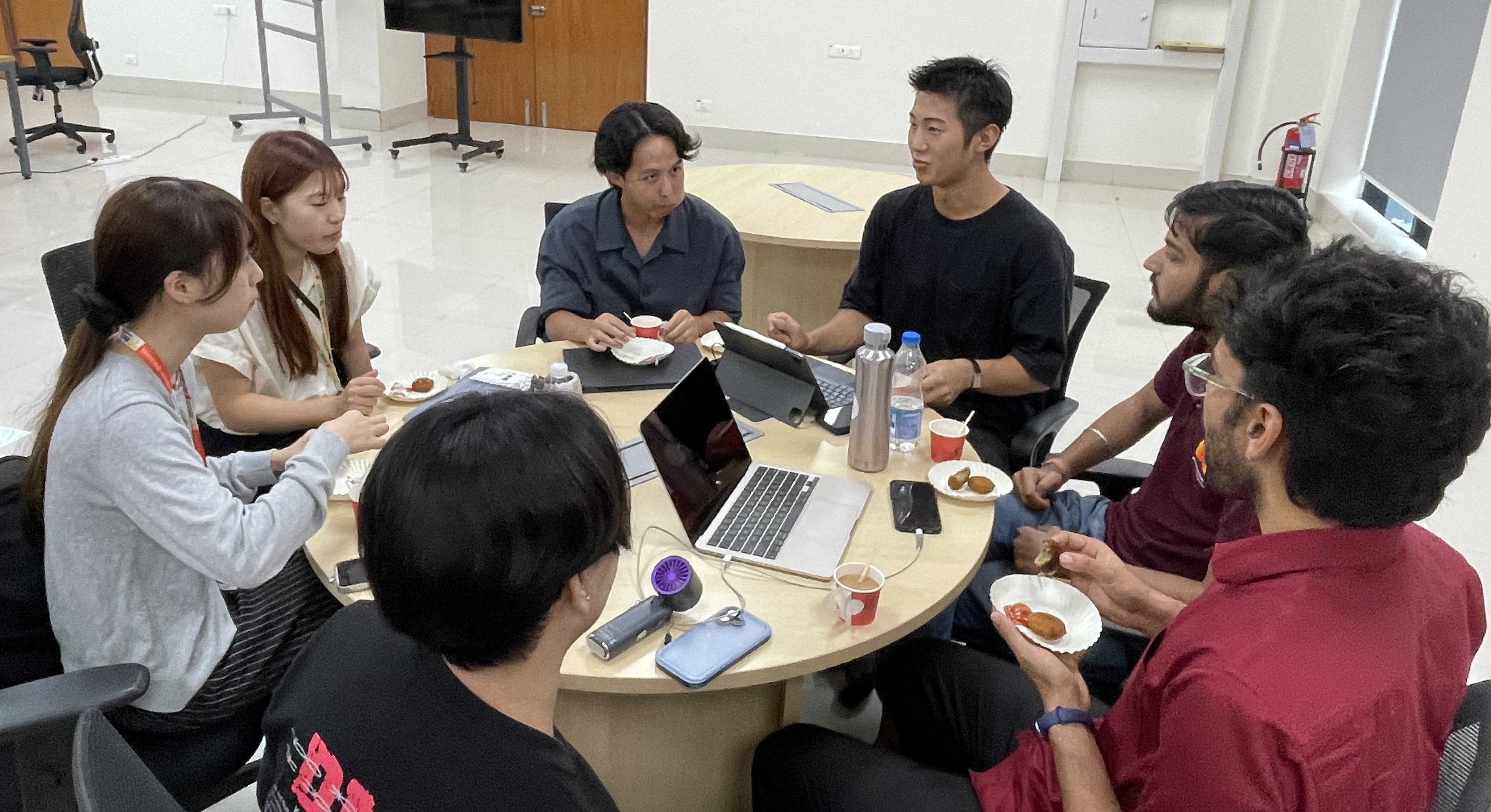
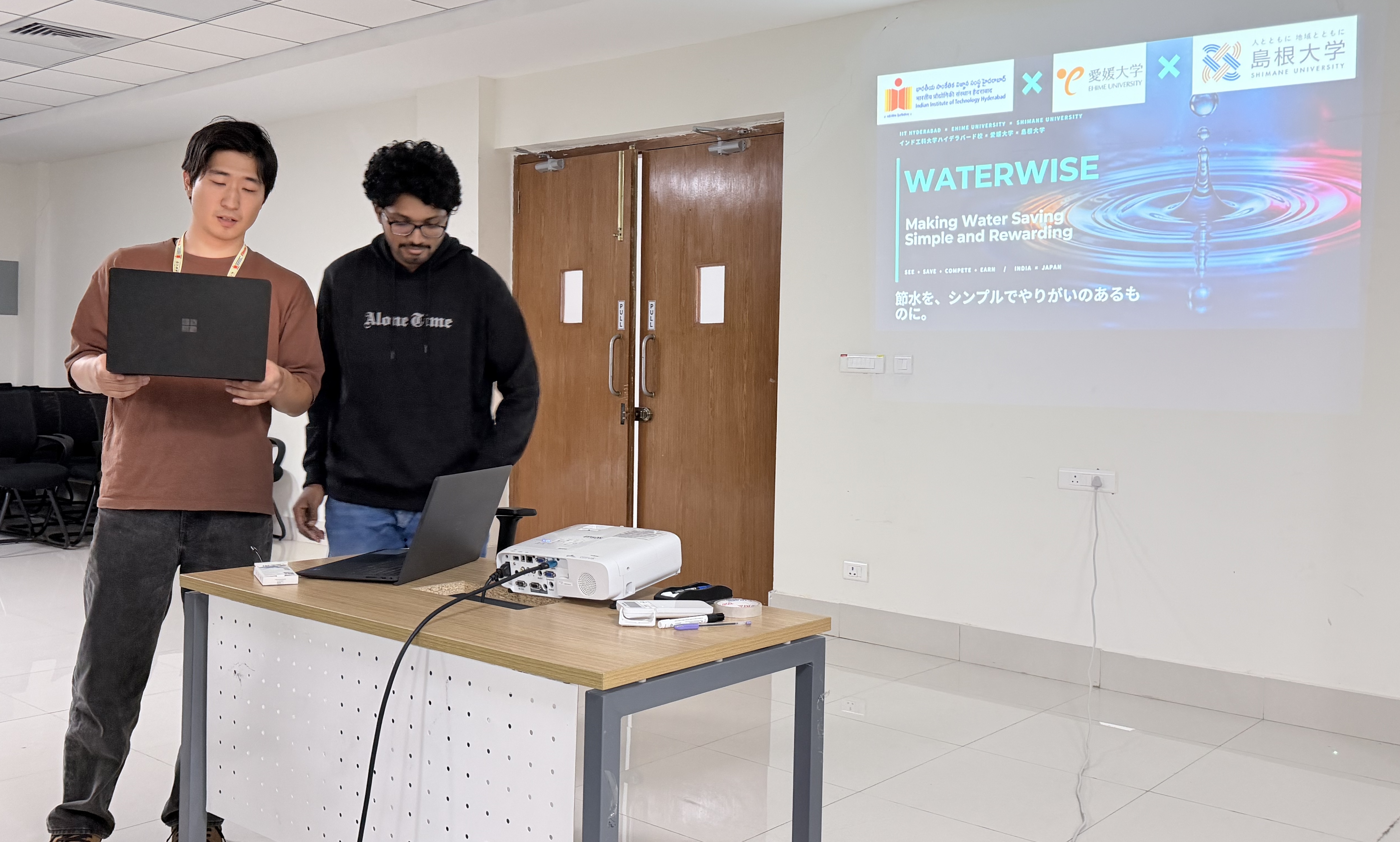
Students discussing their ideas A scene during the presentations
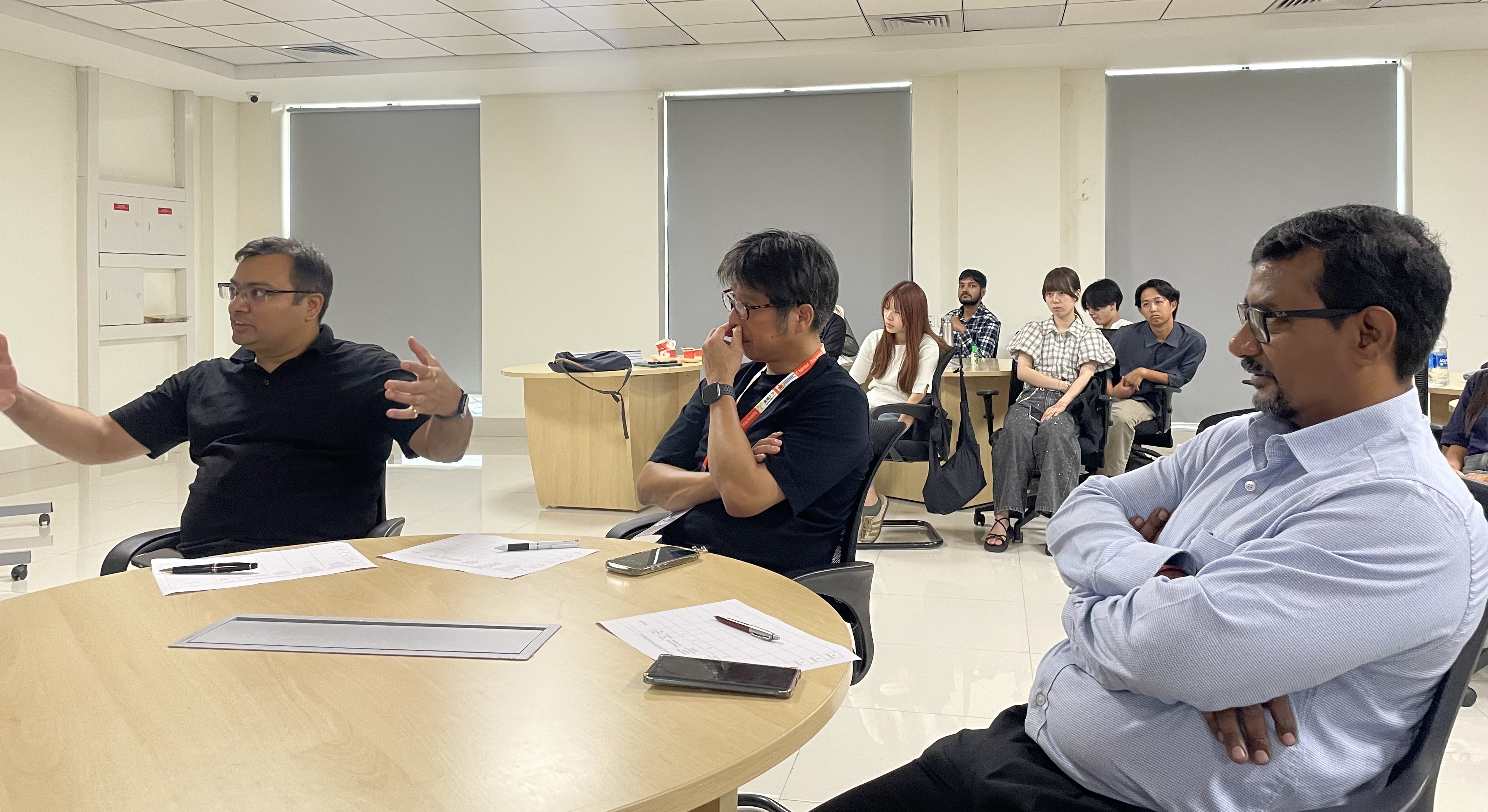
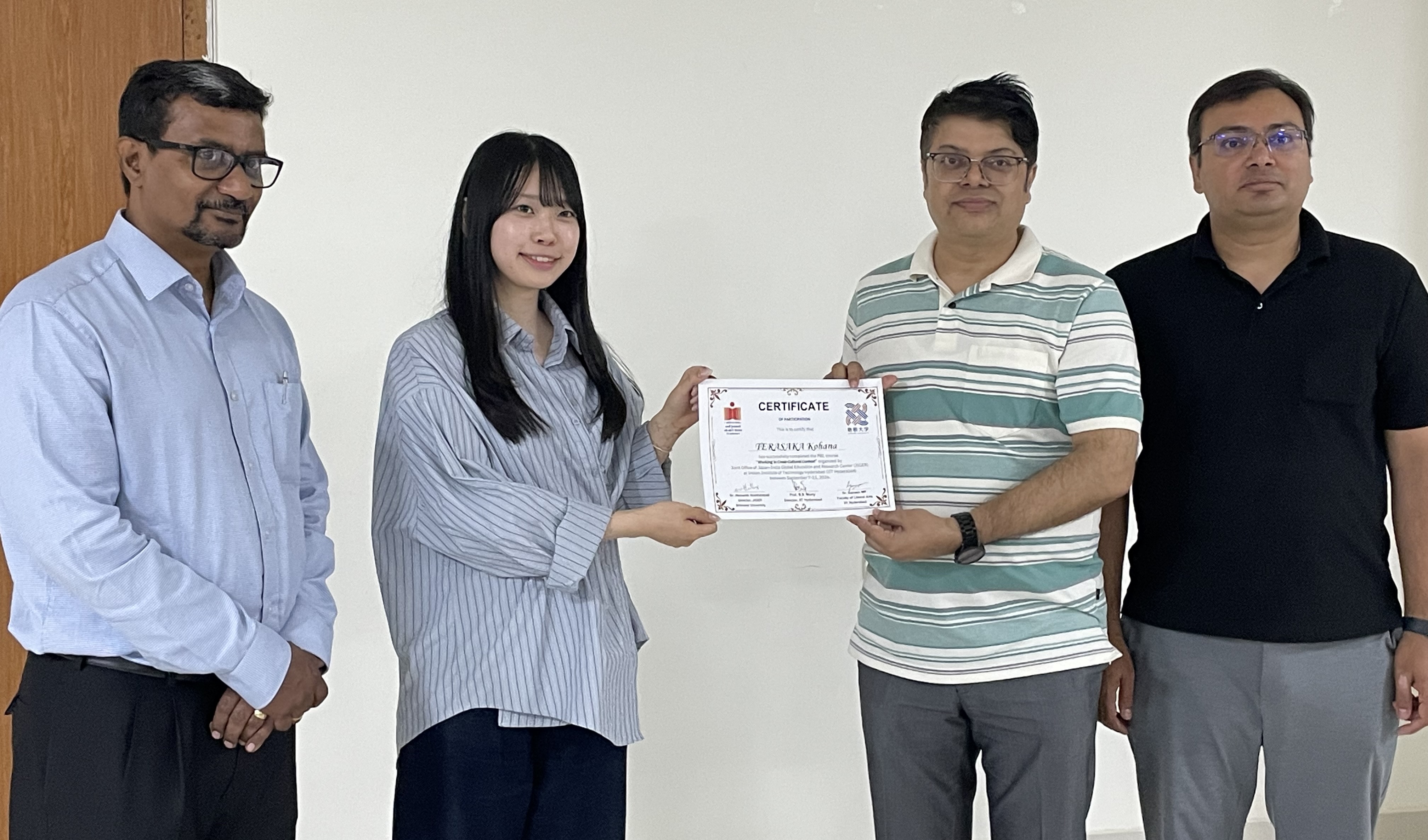
Professors commenting on student presentations Students receiving certificates of completion
From left: Prof. MP Ganesh (IITH),
Prof. Tarun Panda (Dean of International Relations, IITH),
and Director Noothalapati (Shimane University)
After class, the students participated in cultural exchange programs organized by IITH students, including dance performances, "mehendi" (henna art) sessions, and sari-wearing experiences. Active interaction among the students took place not only during class hours but also through these extracurricular activities.
Opportunities were also provided to visit local schools outside the IITH campus and interact with the students. Furthermore, a city tour of Hyderabad allowed the participants to experience aspects of daily life, culture, and the city's vibrancy that differed from the university campus environment, offering insights that could not be gained in the classroom.
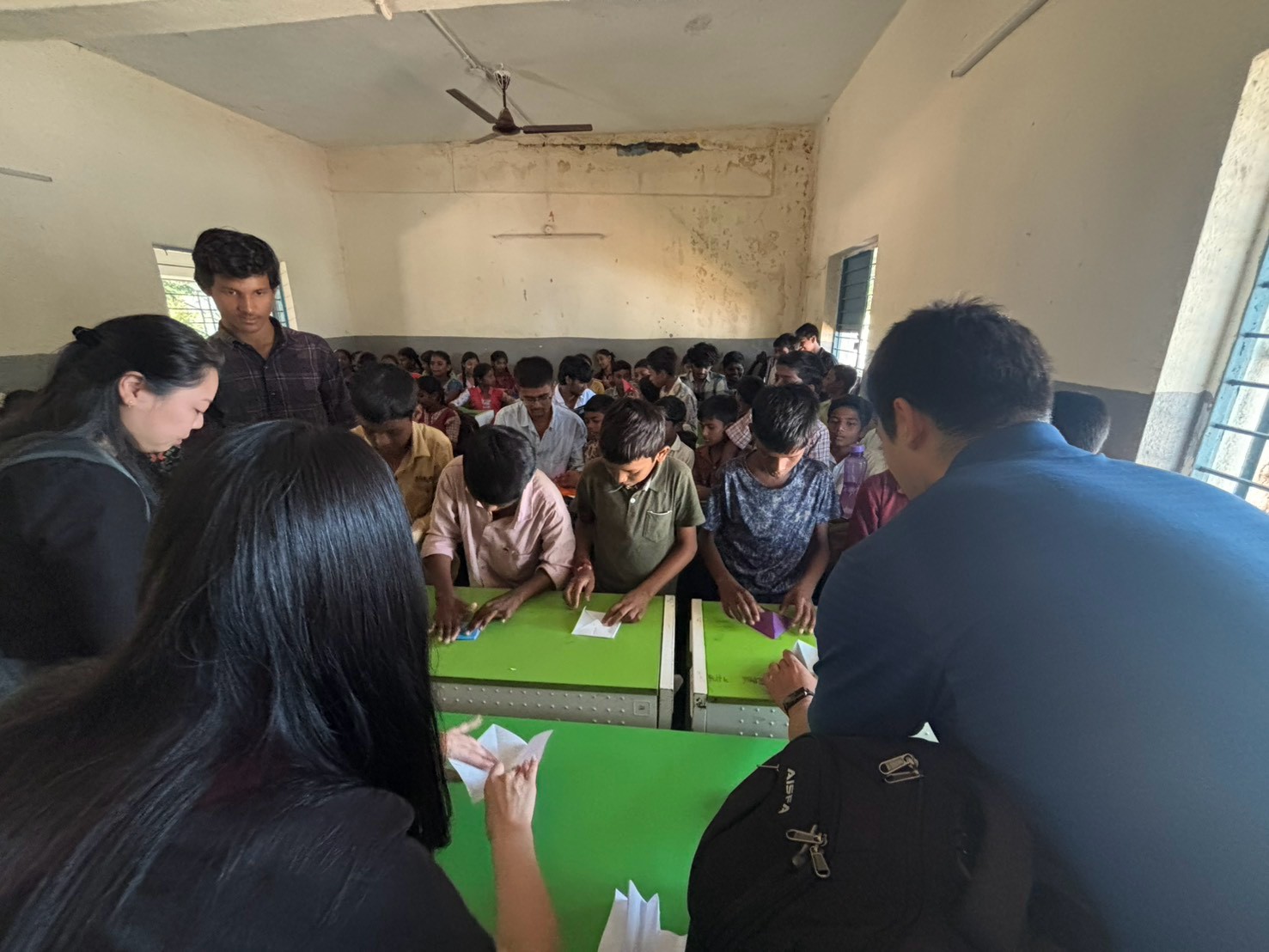
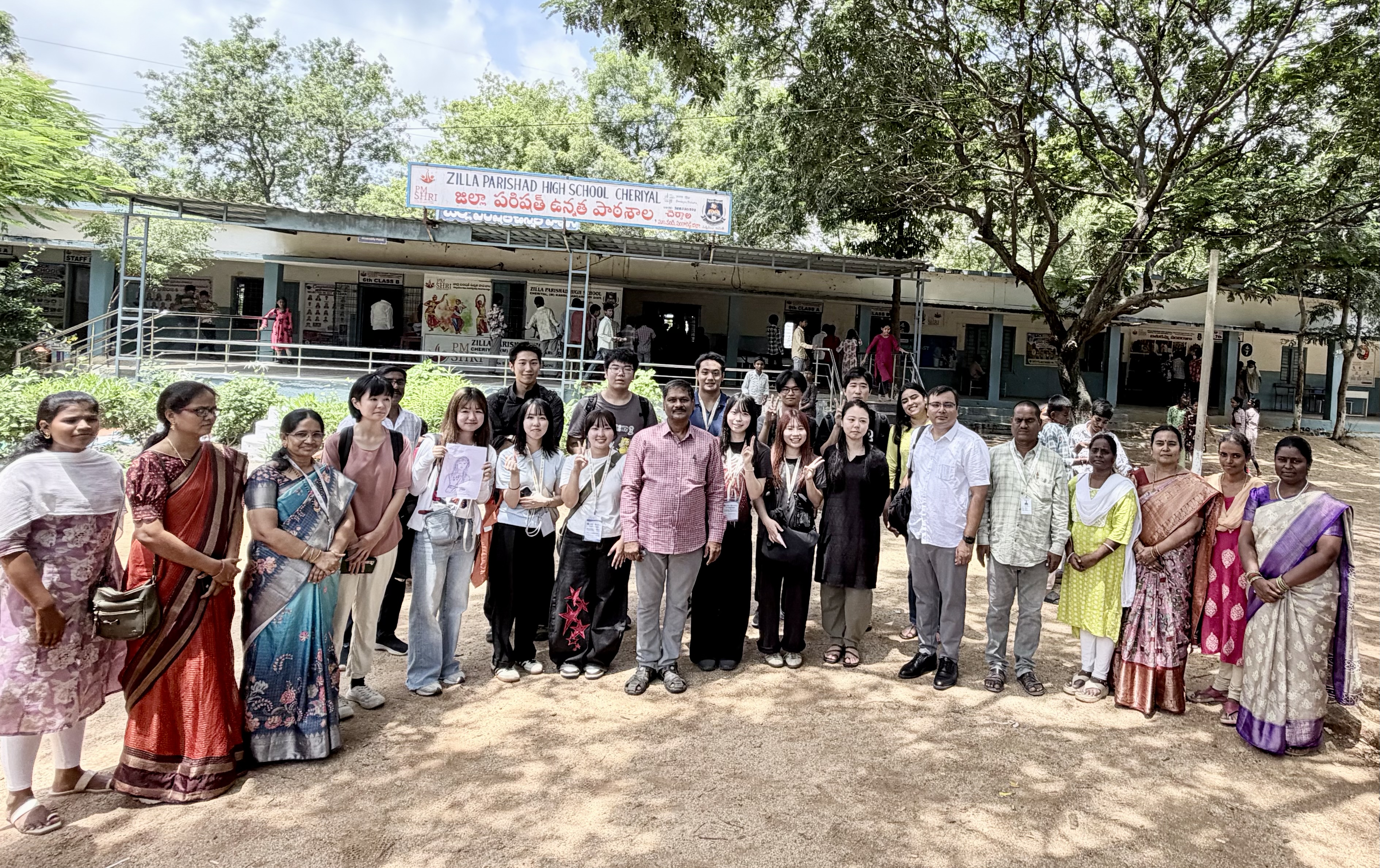
Teaching students origami at school With school teachers
Finally, the warm welcome and attentive support provided by the faculty, staff, and students at IITH who offered tremendous cooperation in realizing this program left a lasting impression on the participating students. Through interactions with people from diverse cultural backgrounds and with different cultural values, the students deepened their cross-cultural understanding. They also learned the importance of taking an interest in others' backgrounds and perspectives and engaging in ongoing dialogue to truly understand one another.
This training program served as a valuable experience for the participating students, allowing them to broaden their international horizons while reflecting on their own values.
Moving forward, JIGER remains committed to further strengthening partnerships with our partner universities through such activities, thereby enriching opportunities for international student exchanges and the development of global talent.
To share the outcomes of this training and the students' learning experiences with a wider audience, a debriefing session is scheduled for Friday, October 30, 2026. During the session, participating students will present their on-site experiences and academic achievements, sharing the insights and lessons gained through the program.